Sunday, January 27, 2019

SENSEational Story Time: "Winter is Here!"

No Two Alike by Keith Baker cover with two red birds on snowy tree
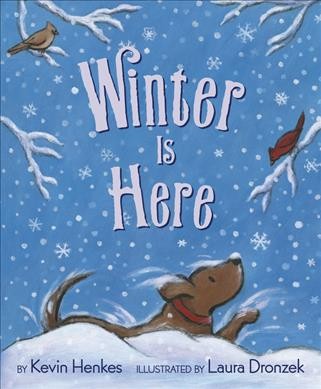
 Winter is Here by Kevin Henkes cover with snow falling on birds in tree and dog on ground

As I write this, I am staring at the snow out my window and wondering how much snow we are getting from the next snow storm on its way tomorrow... It may not have been snowing on the Saturday of this story time a couple weeks ago, but we still had some snowy fun inside!

Here's the plan:

Visual schedule with images of story time activities
1. Hello!

2. Welcome song: "The Story Time Ball"
tune: "Wheels on the Bus"
(Roll ball back and forth to each child)
The story time ball rolls back and forth,
back and forth, back and forth.
The story time ball rolls back and forth,
Let's see who it found. Hi ______!
Now roll it back to me.
(Keep rolling back and forth until each child has said their name.)


3. Yoga poses: "Winter" yoga flow
(source: Kids Yoga Stories)
We got ready for some winter fun outside with the "snowboarder" and "downhill skier" poses.


4. Flannel rhyme: "Where's the Snowball?"


5 flannel mittens with one small white flannel circle on flannel board
Snowball, snowball, cold and round!
Behind which mitten can you be found?
Put colored mittens on the board (hiding snowball behind one) and tell kids one of the mittens is holding a snowball. Repeat by having kids close their eyes while you move it or turn around flannel board and move it.
(source:AnnesLibraryLife)


5. Story with sensory experiences: No Two Alike by Keith Baker
We talked about how some things may look the same, but when you look closer, they are different (i.e. snowflakes). A great lesson in perception and spatial awareness! As I read the story, I showed the kids two large paper snowflakes, like the snow flakes falling in the story (thank you to our intern Lauren for making these because I still cannot make paper snowflakes after all these years!). We talked about their differences and how they may look similar if smaller and with many other snowflakes collecting on the ground and tree branches. I also brought in two different leaves, as seen dangling on the branches in the story. Both of the leaves were brown. We looked at each one, holding and touching the leaves. We all agreed one had a softer, smooth texture than the other. I also showed the kids two of our cardinal puppets, like the red birds in the story, but different sizes.


two paper snowflakes, No Two Alike book, two brown leaves, two red bird puppets


6. Sensory song: "Snowball Song"
We used these neat fabric snowballs to roll,"crunch," and toss as we sang.
container of fabric snowballs
tune: "Frère Jacques"
(holding fabric snowball)
Make a snowball, make a snowball
Feel it crunch, feel it crunch
Cold and round and crunchy...
Crunchy, crunchy, crunchy
Toss it up.
Toss it up.


7. Story with sensory experiences: Winter is Here by Kevin Henkes

We listened and discovered how quiet snow is while falling and settling on things like trees, houses... or our hands! I pre-made up a batch of my favorite Insta-Snow and dropped a few "snowflakes" into everyone's hands. I also brought in a bowl of melting ice and used a dropper to "drip" cool water in each child's hands so they could feel the ice dripping "from the roofs." 

bowl with ice water and dropper
I found some leaves on the ground outside and froze them in a bowl full of water the day before so we could see and feel the ice-covered "pond" found by the dog in the story.

bowl with leaves frozen in water


8. Parachute activity: "Winter Song"
(Raise, shake, and lower parachute "tree." You can also add cotton ball "snowflakes" to the parachute to fall out of the tree)
Way up high in the snowy tree,
lots of little snowflakes smiled at me.
I shook that tree as hard as I could,
and down came the snowflakes...
were they cold! Brrrrr!


9. Goodbye song and stretch: "Tickle the Clouds"
Tickle the clouds.
Tickle your toes.
Turn around and tickle your nose.
Reach down low.
Reach up high.
Story time's over.
Wave goodbye!


10. Play time and activity:
We played with "snow" at the table and made snowflakes on the light panels with Magna-Tiles.


kids playing with artificial snow on table

kids scooping and playing with artificial snow on table

child and adult putting together Magna-Tile snowflakes on light panel


Tuesday, December 11, 2018

Outreach: "Animals in the Winter"

Cover of Over and Under the Snow book with images of parent and child skiing over the snow and an animal sleeping under the snow


Ed and I visited one of our outreach favorites last week! We love bringing our multi-sensory story time programs to the students at the Wing Lake Developmental Center, a year-round school that serves students, ages 3 - 26 years, in Oakland County with severe cognitive impairments (SCI) and severe multiple impairments (SXI). We try to provide as many sensory experiences as we can, so students with visual disabilities, motor difficulties, and other developmental disabilities can truly engage with the story time.

This visit focused on what animals do in the winter time. We chose to read Kate Messner's Over and Under the Snow, a picture book with so many wonderful sensory opportunities!

Here's our plan:

1. Hello (Talk about our picture schedule)


2. Talk about our theme: Animals in the Winter
"Today we are learning about what animals do in the winter time. What do you do in the winter? Do you like the cold? Snow? What do you like to eat when it is cold outside? Do you feel more sleepy, like some animals do?


3. Mindfulness exercise: "(Hibernating) Bear Breath"
Close your eyes and imagine you are a bear going inside your cave to get ready to sleep all winter.

Take a nice, deep breath in for 5 seconds (1,2,3,4,5) and then hold for 3 seconds (1,2,3).

Now breathe out for a count of five seconds (1,2,3,4,5) and then hold for 3 seconds (1,2,3).

Let's repeat.

Now open your eyes and notice how relaxed you feel, like that sleepy bear.

(source: Yoga Pretzels)


4. "(Where is) Sleepy Bear?"
Use two hands or two fingers and sing to tune of "Where is Thumbkin?"

Where is bear? Where is bear?
Here I am. Here I am.
How are you this winter?
Very tired, thank you.
Go to sleep. Go to sleep.
Say "Wake up bear!" and repeat


5. Story with sensory experiences: Over and Under the Snow by Kate Messner

Projecting this story on the big screen, which is available in eBook format on OverDrive, helps our large groups to see the story better. We can also be hands-free to read and describe the illustrations while bringing all of our sensory experiences around to each student, with the help of teachers and aides in the room:

table with cups of hot cocoa, pea gravel, artificial snow, baskets with furry fabric and feathers, tree branches, bag of leaves, white furry fabric
Page spread with owl and shrew
Rattling leftover leaves (rustling leaves in bags for each student to hear)
Sound of great horned owl (make owl sounds with students)
Tiny shrew following tunnel along the moss... (lift-the-flap touch/feel box covered in white flannel with moss and shrew/mole puppet inside for each student to see, touch, feel)
mole/shrew puppet inside touch/feel box

Page with deer mice under the snow
Mice cuddling up against the cold in a nest of feathers and fur (small baskets lined with "furry fabric" and feathers, with small mouse finger puppet to touch/feel)
basket with furry fabric, feathers, and mouse finger puppet


Page with snowshoe hare under tree
Snowshoe hare smoothing her fur (pieces of white artificial "fur" to touch/feel)

Page with two beavers under the snow
Beavers gnawing on aspen bark (pieces of tree bark to touch/feel and smell)

Page spread with fox leaping over the snow
He heard a scritch-scritch-scratching along underneath (rustling cups of pea gravel around the students so they can hear the little mouse under the snow)
bag of pea gravel

Page spread with full moon
A full moon lights my path to supper... (dimming the lights and shining bright daylight lamp to shine the "moonlight" for everyone to experience)

natural daylight lamp

Page spread with bear under the snow and cross country skiing parent and child coming upon a bonfire over the snow with hot cocoa
(cups of hot cocoa brought near each student to smell the delicious aroma)

Page spread with feathery-soft snow flakes falling
(bowls of artificial snow brought to each student to touch/feel)


6. Song: "Sprinkle, Sprinkle, Little Snow" with ASL sign for snow
tune: Twinkle, Twinkle, Little Star
Sprinkle, sprinkle, little snow
falling down on us below.
Small and white and powdery,
such a joy for all to see.
Sprinkle, sprinkle, little snow
falling down on us below.


7. Sensory activity: "Animals in winter" sensory bags 
We had some of our volunteers pre-draw the outline of a tree and the ground level on gallon-size ziplock bags and use our di-cut machine to cut out owl, squirrel, and mouse shapes from foam. We gave each student one of these bags along with 3 scoops of our artificial snow, and then we added the animal shapes. Teachers and aides helped us to close up the bags so students could "smoooosh" the snow inside and move the animals around over and under the snow. We talked about which animals from the story (mice, squirrel) go over and under the snow and which animals stay above the snow (owl).

student squeezing snow in sensory bag

student holding up winter animal sensory bag


winter animal sensory ziplock bag filled with artificial snow and foam shape owl, mouse, and squirrel

ziplock bag with tree outline and ground level line drawn on


Sunday, December 9, 2018

Adults in the Youth Room?: Welcoming Adults with Developmental Disabilities in the Library

Hand tree with colorful hand leaves of all sizes

Are we walking a line between ageism and ableism? Have we unintentionally excluded someone while welcoming another?

And so a pressing conversation began at our recent meeting of the Accessibility Services Roundtable (ASR), a group of youth, teen, and adult services librarians in Michigan working with patrons who have disabilities. We all have different perspectives regarding library services for adults with developmental disabilities. So why can't we seem to find a perfect balance? 

Three years ago, we were seeing an increase of adults with disabilities from nearby group homes visiting our library. They were coming to the library to eat lunch or a snack in the cafe and then visit the Youth Room, where they found emerging-level reading materials, games, coloring, and a space that is a little more forgiving of noise to be the most appealing. Wanting to engage these weekly visitors better, I collaborated with my colleague over in Adult Services, Ed Niemchak, to develop an age-respectful story time for teens and adults with disabilities. See our guest post on Bryce Kozla's blog here: http://brycekozlablog.blogspot.com/2018/09/sensory-story-time-for-adults.html . 

Positive feedback and demand for more programming led Ed to add monthly sensory-friendly movie programs as well. When these programs are not being offered, we still see our adult group home friends in the Youth Room on almost a daily basis. Some caregivers are very engaged with their residents, helping them find materials, making sure they are set up at the one of the listening stations, coloring, or using one of the computer stations. Some might not be as engaged or just need some ideas/resources shared with them.

We had 34 librarians at our fall/winter ASR meeting, and almost all of them expressed an interest in what other libraries are doing for visiting group homes in the library, especially the Youth Room. Some libraries also offer sensory story times, craft programs, or fantastic volunteer programs for adults with developmental disabilities. But what about when we aren't in a program? What about the other days of the week or the rest of the month when we have adults visiting the same room as a young child with their caregiver? A young child who also wants to play at the early literacy stations but is intimidated by the physically larger person seated next to him playing the same game he wants to play? Can we welcome one and unknowingly turn away the other? If we are being inclusive of all ages and abilities, then shouldn't we welcome everyone in the library space where they feel the most comfortable regardless of their height or age? 

As one librarian pointed out, we want to classify everything from materials to our patrons in the library. By doing this we can apply developmental stage expertise and best practices in our services for youth, teens, adults, and seniors. Unfortunately, we cannot classify everything and everyone as it turns out, and that is when we as librarians feel uncomfortable. Can we provide an intergenerational space that is welcoming to all ages and abilities?

Why should we be sending people to the Adult Room if they find the materials in the Youth Room more appealing and less intimidating? Should we be re-thinking Adult Services, incorporating quiet and "noisier" spaces to accommodate visiting groups of people? Adults with cognitive or intellectual disabilities are still adults who should be receiving the same respect in services as any other adult in the library. If 1 in 4 adults in the U.S. are living with a disability, and an estimated 4.6 million Americans have an intellectual or developmental disability, we need to consider accessibility and equity services with the same care as youth, teen, or adult services if we aren't already.

While we may not have the answers to all of these questions yet, the one common denominator remains among librarians working in all departments (in libraries of all sizes): our actions and not just aspirations toward inclusion. Merriam-Webster defines inclusion simply as "the act of including." Are traditional public library spaces and services being inclusive of everyone? This conversation needs to continue and I look forward to hearing more about how other libraries are being inclusive of adults with disabilities.

I enjoy greeting our group home visitors, introducing myself and getting to know everybody, including the caregivers. Here are a few passive activity ideas that librarians in our group are offering adults with developmental disabilities visiting the youth room and adult room in between targeted and inclusive programs:
  • coloring sheets with packs of colored pencils (preferred over crayons)
  • puzzles
  • board games
  • activity sheets (simple search & finds or crossword puzzles)
  • keeping a small stack of Hi-Lo fiction and age-respectful emerging reader non-fiction titles at the Youth or Adult Desk (and changing it weekly)
What service(s) or program(s) is your library providing for adults with developmental disabilities?


Wednesday, November 14, 2018

SENSEational Story Time: "Up, Down & All Around"

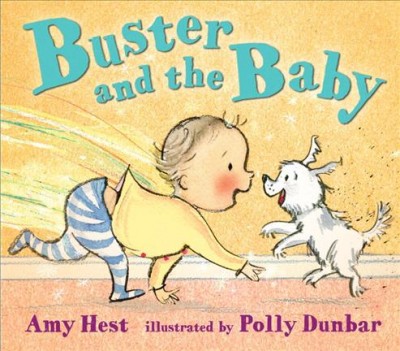
Cover of Buster and the Baby with baby running up to excited little dog
 Cover of Where is Jumper? with 1 mouse on top and 3 mice running over hill at the bottom


Often times the book chooses the theme for my story times. I was so excited to use Buster and the Baby in story time with its active repetitive sounds and fun exploration of spatial concepts. This led to a very interactive "Up, Down, & All Around" experience. Here's the plan:

1. Hello!


2. Welcome  Song: "The Story Time Ball"
tune: "Wheels on the Bus"
(Roll ball back and forth to each child)
The story time ball rolls back and forth,
back and forth, back and forth.
The story time ball rolls back and forth,
Let's see who it found. Hi ______!
Now roll it back to me.
(Keep rolling back and forth until each child has said their name.)


3. Crossing-the-Midline (CTM) exercise: "Picking apples"
Reach up and over to one side to pick your apple from the imaginary tree branch.
Place that "apple" down and over into your imaginary basket.
(repeat on the other side)

Crossing our arms or legs over the center line of our body is an important skill that contributes to our body's bilateral coordination. Children who have difficulty with this skill may have difficulty completing tasks such as dressing, walking, catching/throwing, and other tasks that require coordinating both sides of the body.


4. Flannel rhyme: "Hickory Dickory Dock"


flannel clock and mouse

Hickory dickory dock
The mouse ran up the clock
The clock struck one
The mouse ran down
Hickory hickory dock.


5. Story (with flannels): Buster and the Baby by Amy Hest
Our wonderful clerical assistant, Jennifer, created flannels for this story. I had kids take turns coming up to the flannel board to place Buster under the table, behind the chair and bear, and under the covers while reading this fun story.


flannel bed with blanket, giant teddy bear, chair, table with cover, dog, and baby


6. Bean bag rhyme: "Bean Bag Song"
I loved using our new (and fun textured) bean bags we just got in!

colorful and textured bean bags
Put your bean bag in your hair, in your hair.
Put your bean bag in your hair,
and leave it right there.
Put your bean bag in your hair, in your hair.

Put your bean bag on your toes, on your toes...
Raise it high and raise it low...

Put your bean bag in your hand, in your hand...
Toss it up and watch it land...
(source unknown)


7. Sensory story: Where is Jumper? by Ellen Stoll Walsh
I used our mouse flannels from Mouse Count and our flannel log from the "5 Green & Speckled Frogs" set to place on our flannel board while reading. I also placed our mole puppet inside our touch/feel box for kids to touch (and then lift the flap to see him "underground"). A larger puppet version of "Jumper" and smaller flannel mice were placed in a sensory bin filled with textured paper leaves, straw, corn, and sticks for the kids to find at the end.


5 flannel mice on a flannel log

mole puppet peeking out of touch and feel box
 touch and feel box flap lifted to reveal mole puppet inside

sensory bin filled with textured paper leaves, straw, corn, sticks, mouse puppet and small flannel mice


8. Parachute activity: "Noble Duke of York"
Oh the noble Duke of York,
He had 10 thousand men.
He marched them up to the top of the hill
then marched them down again.
And when you're up, you're up.
And when you're down, you're down.
But when you're only halfway up,
you're neither up nor down!

Raise and lower parachute as directed.


9. Goodbye song and stretch: "Tickle the Clouds"
Tickle the clouds.
Tickle your toes.
Turn around and tickle your nose.
Reach down low.
Reach up high.
Story time's over.
Wave goodbye!


10. Play time: We put together a tactile path to walk on and played with balls and toy cars up and down the cushion "hills" and through our tunnel.

kids walking on tactile path pieces

child playing with toy cars on top of tactile path

child and adult playing next to tunnel

Thursday, October 18, 2018

SENSEational Story Time: "Let's Go!"

Cover of My Bus by Byron Barton with bus, bus driver, and 5 dogs and 5 cats aboardCover of The Bridge is Up! by Babs Bell with yellow car waiting at draw bridge


It has been an exciting and busy school year so far! Our SENSEational Story Times started up again (after a summer break) on the third Saturday morning in September. I love to start sensory story times in the fall with one of our favorite themes: "Things that go!" We learned about the many different ways we can go places (i.e. the school bus!) and then had fun playing with some of these modes of transportation in gluten-free play dough. Here's the plan:

Visual schedule with pictures of activities in story time
1. Hello! (Welcome families and talk about what SENSEational Story Time is all about, including an explanation of the visual schedule and letting folks know it's okay to take an "over-stimulation break" and come back in when ready.)


2. Welcome song: "The Story Time Ball"
tune: "Wheels on the Bus"
(Roll ball back and forth to each child)
The story time ball rolls back and forth,
back and forth, back and forth.
The story time ball rolls back and forth,
Let's see who it found. Hi ______!
Now roll it back to me.
(Keep rolling back and forth until each child has said their name.)


3. Mindfulness exercise: "Hot Air Balloon" breath 
Stand tall or sit up.
Place your hands on your stomach.
Breathe in and feel your stomach rise (blow the balloon up, up, up).
Breathe out and feel your stomach (the balloon) go in.
Repeat and then relax and release the balloon.


4. Flannel rhyme: "Clickety Clack"

flannel train with engine, coal car, box car, tank car, coach car, and caboose
Clickety-clack, clickety clack,
Here comes the train on the railroad track!

Clickety-clunn, clickety-clunn,
Here comes Engine number one.

Clickety-clew, clickety-clew, 
Here comes Coal Car number two.

Clickety-clee, clickety-clee,
Here comes Box Car number three.

Clickety-clore, clickety-clore,
Here comes Tank Car number four.

Clickety-clive, clickety-clive,
Here comes Coach Car number five.

Clickety-clicks, clickedty-clicks,
Here's the Caboose, that's number six.

Clickety-clack, clickety-clack,
There goes the train on the railroad track!

Choo-chooooooo!
(source: Mel's Desk)


5. Story: The Bridge is Up! by Babs Bell
Sometimes we have to stop and wait for a bit when we are going places! I love this cumulative tale (and great life lesson in patience and waiting our turn), repeating the line "so everyone has to wait" as each vehicle gets to the bridge. We created our own waiting experience after reading the story. I gave each child a circle-shaped bean bag (steering wheel) and had two caregivers hold up our brown paper "bridge" as each child steered their vehicle to the line while I read it again. When the bridge goes down, the caregivers placed our paper bridge on the floor for each child to "drive" across.


6. Stretch band rhyme: "Row, Row, Row Your Boat"
Row, row, row your boat
gently down the stream,
Merrily, merrily, merrily, merrily,
life is but a dream.
(repeat, pulling back and forth on our stretch band "oars" to row our boat)


7. Flannel Story: My Bus by Bryon Barton 
I gave each child a flannel dog or cat to add to our bus as the story goes.

flannel bus, boat, plane, train, 5 dogs, and 5 cats


8. Parachute activity: "Wheels on the Bus"
(Kids can sit under the parachute or hold the parachute to experience.)
The wheels on the bus go round and round,
round and round, round and round.
The wheels on the bus go round and round,
all over town.
(parachute goes around)

The doors on the bus go open and shut...
(parachute goes in and out)
The windows on the bus go up and down...
(parachute goes up and down)
The people on the bus go bumpity bump...
(Shake that parachute!)


9. Goodbye song and stretch: "Tickle the Clouds"
Tickle the clouds.
Tickle your toes.
Turn around and tickle your nose.
Reach down low.
Reach up high.
Story time's over.
Wave goodbye!


10. Play time activity: We played with toy cars and trucks in the gluten-free play dough roads we rolled out. We love this wheat & gluten-free dough from Lakeshore! (Note: unfortunately, this item may have just been discontinued at Lakeshore but you can get a similar product at Discount School Supply.)

two kids playing with orange dough and toy cars

container of orange wheat and gluten-free doughchild rolling out orange dough