Wednesday, November 14, 2018

SENSEational Story Time: "Up, Down & All Around"

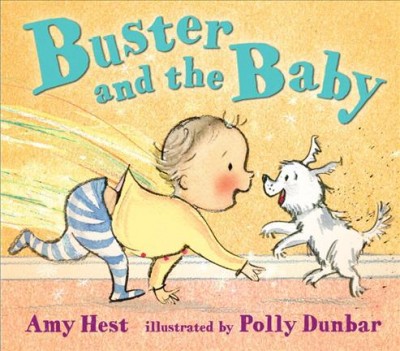
Cover of Buster and the Baby with baby running up to excited little dog
 Cover of Where is Jumper? with 1 mouse on top and 3 mice running over hill at the bottom


Often times the book chooses the theme for my story times. I was so excited to use Buster and the Baby in story time with its active repetitive sounds and fun exploration of spatial concepts. This led to a very interactive "Up, Down, & All Around" experience. Here's the plan:

1. Hello!


2. Welcome  Song: "The Story Time Ball"
tune: "Wheels on the Bus"
(Roll ball back and forth to each child)
The story time ball rolls back and forth,
back and forth, back and forth.
The story time ball rolls back and forth,
Let's see who it found. Hi ______!
Now roll it back to me.
(Keep rolling back and forth until each child has said their name.)


3. Crossing-the-Midline (CTM) exercise: "Picking apples"
Reach up and over to one side to pick your apple from the imaginary tree branch.
Place that "apple" down and over into your imaginary basket.
(repeat on the other side)

Crossing our arms or legs over the center line of our body is an important skill that contributes to our body's bilateral coordination. Children who have difficulty with this skill may have difficulty completing tasks such as dressing, walking, catching/throwing, and other tasks that require coordinating both sides of the body.


4. Flannel rhyme: "Hickory Dickory Dock"


flannel clock and mouse

Hickory dickory dock
The mouse ran up the clock
The clock struck one
The mouse ran down
Hickory hickory dock.


5. Story (with flannels): Buster and the Baby by Amy Hest
Our wonderful clerical assistant, Jennifer, created flannels for this story. I had kids take turns coming up to the flannel board to place Buster under the table, behind the chair and bear, and under the covers while reading this fun story.


flannel bed with blanket, giant teddy bear, chair, table with cover, dog, and baby


6. Bean bag rhyme: "Bean Bag Song"
I loved using our new (and fun textured) bean bags we just got in!

colorful and textured bean bags
Put your bean bag in your hair, in your hair.
Put your bean bag in your hair,
and leave it right there.
Put your bean bag in your hair, in your hair.

Put your bean bag on your toes, on your toes...
Raise it high and raise it low...

Put your bean bag in your hand, in your hand...
Toss it up and watch it land...
(source unknown)


7. Sensory story: Where is Jumper? by Ellen Stoll Walsh
I used our mouse flannels from Mouse Count and our flannel log from the "5 Green & Speckled Frogs" set to place on our flannel board while reading. I also placed our mole puppet inside our touch/feel box for kids to touch (and then lift the flap to see him "underground"). A larger puppet version of "Jumper" and smaller flannel mice were placed in a sensory bin filled with textured paper leaves, straw, corn, and sticks for the kids to find at the end.


5 flannel mice on a flannel log

mole puppet peeking out of touch and feel box
 touch and feel box flap lifted to reveal mole puppet inside

sensory bin filled with textured paper leaves, straw, corn, sticks, mouse puppet and small flannel mice


8. Parachute activity: "Noble Duke of York"
Oh the noble Duke of York,
He had 10 thousand men.
He marched them up to the top of the hill
then marched them down again.
And when you're up, you're up.
And when you're down, you're down.
But when you're only halfway up,
you're neither up nor down!

Raise and lower parachute as directed.


9. Goodbye song and stretch: "Tickle the Clouds"
Tickle the clouds.
Tickle your toes.
Turn around and tickle your nose.
Reach down low.
Reach up high.
Story time's over.
Wave goodbye!


10. Play time: We put together a tactile path to walk on and played with balls and toy cars up and down the cushion "hills" and through our tunnel.

kids walking on tactile path pieces

child playing with toy cars on top of tactile path

child and adult playing next to tunnel

Thursday, October 18, 2018

SENSEational Story Time: "Let's Go!"

Cover of My Bus by Byron Barton with bus, bus driver, and 5 dogs and 5 cats aboardCover of The Bridge is Up! by Babs Bell with yellow car waiting at draw bridge


It has been an exciting and busy school year so far! Our SENSEational Story Times started up again (after a summer break) on the third Saturday morning in September. I love to start sensory story times in the fall with one of our favorite themes: "Things that go!" We learned about the many different ways we can go places (i.e. the school bus!) and then had fun playing with some of these modes of transportation in gluten-free play dough. Here's the plan:

Visual schedule with pictures of activities in story time
1. Hello! (Welcome families and talk about what SENSEational Story Time is all about, including an explanation of the visual schedule and letting folks know it's okay to take an "over-stimulation break" and come back in when ready.)


2. Welcome song: "The Story Time Ball"
tune: "Wheels on the Bus"
(Roll ball back and forth to each child)
The story time ball rolls back and forth,
back and forth, back and forth.
The story time ball rolls back and forth,
Let's see who it found. Hi ______!
Now roll it back to me.
(Keep rolling back and forth until each child has said their name.)


3. Mindfulness exercise: "Hot Air Balloon" breath 
Stand tall or sit up.
Place your hands on your stomach.
Breathe in and feel your stomach rise (blow the balloon up, up, up).
Breathe out and feel your stomach (the balloon) go in.
Repeat and then relax and release the balloon.


4. Flannel rhyme: "Clickety Clack"

flannel train with engine, coal car, box car, tank car, coach car, and caboose
Clickety-clack, clickety clack,
Here comes the train on the railroad track!

Clickety-clunn, clickety-clunn,
Here comes Engine number one.

Clickety-clew, clickety-clew, 
Here comes Coal Car number two.

Clickety-clee, clickety-clee,
Here comes Box Car number three.

Clickety-clore, clickety-clore,
Here comes Tank Car number four.

Clickety-clive, clickety-clive,
Here comes Coach Car number five.

Clickety-clicks, clickedty-clicks,
Here's the Caboose, that's number six.

Clickety-clack, clickety-clack,
There goes the train on the railroad track!

Choo-chooooooo!
(source: Mel's Desk)


5. Story: The Bridge is Up! by Babs Bell
Sometimes we have to stop and wait for a bit when we are going places! I love this cumulative tale (and great life lesson in patience and waiting our turn), repeating the line "so everyone has to wait" as each vehicle gets to the bridge. We created our own waiting experience after reading the story. I gave each child a circle-shaped bean bag (steering wheel) and had two caregivers hold up our brown paper "bridge" as each child steered their vehicle to the line while I read it again. When the bridge goes down, the caregivers placed our paper bridge on the floor for each child to "drive" across.


6. Stretch band rhyme: "Row, Row, Row Your Boat"
Row, row, row your boat
gently down the stream,
Merrily, merrily, merrily, merrily,
life is but a dream.
(repeat, pulling back and forth on our stretch band "oars" to row our boat)


7. Flannel Story: My Bus by Bryon Barton 
I gave each child a flannel dog or cat to add to our bus as the story goes.

flannel bus, boat, plane, train, 5 dogs, and 5 cats


8. Parachute activity: "Wheels on the Bus"
(Kids can sit under the parachute or hold the parachute to experience.)
The wheels on the bus go round and round,
round and round, round and round.
The wheels on the bus go round and round,
all over town.
(parachute goes around)

The doors on the bus go open and shut...
(parachute goes in and out)
The windows on the bus go up and down...
(parachute goes up and down)
The people on the bus go bumpity bump...
(Shake that parachute!)


9. Goodbye song and stretch: "Tickle the Clouds"
Tickle the clouds.
Tickle your toes.
Turn around and tickle your nose.
Reach down low.
Reach up high.
Story time's over.
Wave goodbye!


10. Play time activity: We played with toy cars and trucks in the gluten-free play dough roads we rolled out. We love this wheat & gluten-free dough from Lakeshore! (Note: unfortunately, this item may have just been discontinued at Lakeshore but you can get a similar product at Discount School Supply.)

two kids playing with orange dough and toy cars

container of orange wheat and gluten-free doughchild rolling out orange dough


Thursday, September 6, 2018

She plays, he plays, wee ALL play!

Program room with toys, books, colorful rugs, and squares

Play is important work for babies, toddlers, and preschoolers. Through unstructured play, little ones develop imagination, social/emotional, cognitive and motor skills in the most natural way. Children with disabilities need to learn through play as much as their typically developing peers, building and expanding on their psychological health and these crucial early developmental skills together. Inclusive play groups and programs encourage acceptance and diversity early on and help to serve as a model for creative play, especially important for older little ones who are still learning through parallel play alongside other children.

How can we adapt play programs for children of all abilities? This summer, we made our Wee Play program, for ages birth through three years and their grown-ups, even more inclusive and accessible with a few changes and additions of adaptive aids and toys. We now call this program Wee ALL Play. Here's what we have been doing so far:

  • Adjusting or dimming some of those lights in the room (especially those bright fluorescents!) and taking advantage of our wall of windows in our program room which lets in natural light to help prevent overstimulation in children who are sensory-sensitive. 
  • Making sound-reduction headphones available in the room who may need help cancelling out some of the noise. (You can also add a small pop-up tent in the room for those looking to head off a meltdown or just in need of a "quiet area.")
  • Providing adaptive toys with built-in or attached capability switches for those with fine motor difficulty 
Curious George in the Box and See and Say toy with capability switchesMusical caterpillar toy with built-in capability switches


Musical giraffe toy with high-contrast color feature and capability switch

  • Adding more high-contrast toys, light panel activities, puzzles with sound features, and noisy balls (like the Wiggly Giggly Ball) for youth with visual disabilities
jungle animal puzzle with sound featuresWiggly Giggly ball


 light panels with high contrast shape puzzle pieces        
            

  • Story boxes not only help youth who are blind or have low vision engage with a story, but they are also great for "acting out" stories with tactile manipulatives, providing a sensory experience that helps give more meaning to the words in a story and builds early literacy skills in children of all abilities.
Little Quack story box with book and tactile duck manipulatives

  • Providing simple American Sign Language (ASL) puzzles and toys with visual stimulation features that allow those with hearing disabilities to "see" sounds, like this Pop! Pop! Piano with popping stars.  

Mirari Pop Pop Piano

  • Adding more easy to grip (and great for all abilities!) building and textured sensory toys to help kids build fine motor, sensory and hand-eye coordination skills.

Colorful Tobbles Neo building toy

  • We also added more sensory-engaging gross motor toys, including Bilibo seats and a tactile beam.
blue bilibo seattactile beam pieces


In the future, we may also consider partnering with a local university occupational therapy department to provide some professional therapeutic insight and support for parents and caregivers who are interested.

What are some ways that you have made your play programs more accessible and inclusive?


Monday, July 2, 2018

Outreach: "Springtime Science"

My Adult Services colleague, Ed, and I brought a little multi-sensory spring science lesson to students at the Wing Lake Developmental Center just before Summer Reading started. As I have mentioned before, Wing Lake is a year-round school that serves students, ages 3 - 26 years, in Oakland County with severe cognitive impairments (SCI) and severe multiple impairments (SXI). Often times cognitive disabilities are associated with a younger developmental age. Please read this fantastic post about mental age theory by S. Bryce Kozla i-have-mind-of-infant-mental-age-theory.html. Even though a person with cognitive disabilities may have difficulties with the complexities of language, comprehension, and other developmental skills, it is important to recognize and respect their physical age. Because there is a wide age span of the students here, we do our best to select activities, songs (which are always a hit here!!), and books that are age-respectful. These age-respectful picture books have simple, clear language and illustrations that will appeal to all ages. Books with photograph illustrations are especially great. April Pulley Sayre is one of my favorites!

Here is what we did:


1. Hello! (Talk about Picture Schedule)


2. Talk about our theme: Spring Science
"Today we are having fun with things that we experience in the spring. What are some things you notice outside in the spring? (flowers, birds, leaves growing on trees...)


3. Yoga pose: "Sunrise"


4. Song: "Spring Song" 
Tune: "London Bridge"
Leaves are growing on the trees,
on the trees,
on the trees.
Leaves are growing on the trees.
It is springtime.

Additional verses:
All the grass is turning green...
See the birds build their nest...
Smell the flowers as they grow...


5. Story: Bird Builds a Nest by Martin Jenkins (I love this new "A First Science Storybook" series!)
We incorporated some fun multi-sensory experiences to help students understand some basic science concepts introduced in the book. As we read the book, scanned and projected onto wall screen, Ed and I (along with the teachers and teaching aids) used stretch bands with each student, introducing the concept of "pushing and pulling," as the bird does when attempting to pull a worm out of the ground. We brought around different size twigs to demonstrate "heavy and light" like bird does when finding branches for her nest, and also dropping them (as the mother bird sometimes does) to demonstrate "gravity and force." We also brought feathers, grass, and a bird's "nest" for students to touch and feel.


6. Puppet rhyme: "Owl in the Tree" (using various bird puppets)
Tune: "Skip to My Lou"
Owl in the tree goes, "Hoo, hoo, hoo."
Early in the evening.

Other verses:
Babies in the nest go "tweet, tweet, tweet..." "...all day long"
Duck in the pond goes "quack, quack, quack..."  "...all day long"
Rooster in the yard goes "cock-a-doodle-do..."  "...early in the morning"
(source: unknown)


7. Story: Thank You, Earth by April Pulley Sayre
Again, we took around some sensory engaging experiences to each student while reading this book: vines, sunflowers, and carrots to touch and smell. And don't forget to describe the beautiful illustrations for students who are blind or have low vision!


8. Song: "This Land" (with hand motions)
Tune: "This Land is Your Land"
This land is your land.
This land is my land.
Let's work together,
to make it better.
From tall green forests,
to clear blue waters,
this land depends on you and me!


9. Craft activity: "Coffee filter planet earth"
We used coffee filters, earthy-tone dot markers, water spray bottles, and plates to create our very own planet earth!


Wednesday, May 23, 2018

SENSEational Story Time: "Welcome Home!"


Diversity and acceptance of others is a topic that can and should be talked about with children of all ages and cognitive abilities. Today we talked about different homes, things we see in and around homes, and welcoming others onto our "front porch." Here's the plan:

1. Hello!


2. Welcome  Song: "The Story Time Ball"
tune: "Wheels on the Bus"
(Roll ball back and forth to each child)
The story time ball rolls back and forth,
back and forth, back and forth.
The story time ball rolls back and forth,
Let's see who it found. Hi ______!
Now roll it back to me.
(Keep rolling back and forth until each child has said their name.)


3.  Yoga pose: "flower" -- seated with our legs crossed in "easy pose," taking a deep breath in as we place our hands behind our head and imagine that we are a flower in a flower bed in front of our house, blooming. Then we bring our elbows together in front of our face and lower our head to the floor and exhale. We inhale again as we rise and "bloom" all the way open.


4. Flannel rhyme: "There Was a Little Green House"
(Layer houses underneath and remove top house until you get to the heart.)
There was a little green house.
And in the little green house,
there was a little brown house.
And in the little brown house,
there was a little yellow house.
And in the little yellow house,
there was a little white house.
And in the little white house,
there was a little heart.
(traditional english children's song)


5. Story: My Very First Book of Animal Homes by Eric Carle
We used our set of these board books for every caregiver to interact with this split-page story. We read the story together, finding the home on the bottom of the page that matched with the animal on top.


6. Stretch band rhyme: "My Turtle"
This is my turtle.  (raise stretch band over head)
He lives in a shell.
He likes his home very well. (lower arms and stretch out to sides)
He pokes his head out (lean head forward)
when he wants to eat
and pulls it back (lean head back)
when he wants to sleep. (raise stretch band over head)
(traditional rhyme - source unknown)


7. Puppet story: A Bear Sat on My Porch Today by Jane Yolen
The top of our discovery bin became our "front porch," with the help of a few pieces of cardboard "porch railing" attached with tape. Puppet friends were added to the porch as I read this wonderful, cumulative story of wary strangers becoming friends. Story time kids helped by saying the repetitive "Boo! Shoo!" when asked "What should I do?"


8. Parachute song: "Itsy Bitsy Spider"
The itsy bitsy spider climbed up the water spout. (raise parachute high)
Down came the rain and washed the spider out. (lower parachute)
Out came the sun and dried up all the rain. (raise parachute, walk around in circle, and lower)
And the itsy bitsy spider climbed up the spout again. (raise parachute high)


9. Goodbye song: "Tickle the Clouds"
Tickle the clouds.
Tickle your toes.
Turn around and tickle your nose.
Reach down low.
Reach up high.
Story time's over.
Wave goodbye!


10. Play time: "House building with blocks and Magnatiles on light panels"


Animal habitats "Jungle animals" and "Sea creatures" (using blue moon sand as the ocean)